Last Updated on June 30, 2018 by Editor G
Exploring the Jurassic Coast
Buses are a great way to get around. Particularly double-decker open-top buses that give the public access to beautiful places such as the Jurassic Coast in Dorset As a Londoner I am used to travelling by public transport so when I spent some time in Dorset it was natural for me to take to the buses. Visitors to Dorset can take advantage of the Purbeck Breezer Buses to explore without the hassle of trying to park a car in this very popular area. I soon discovered that buses are a great way to meet local people and learn about the local history. On my way to Swanage I learnt a lot about the surrounding countryside. A large part of this area was once owned by a very wealthy land-owner then taken over by the military and used for exercises. This meant the countryside that fringes the Jurassic Coast has remained relatively undeveloped. Due to its international importance for science and natural history the Jurassic Coast was designated England’s firs natural World Heritage Site in 2001. The first time I went to Swanage it was to be my starting point to walk a section of the South West Coast Path back to Studland where I would take the bus again to my base in Poole
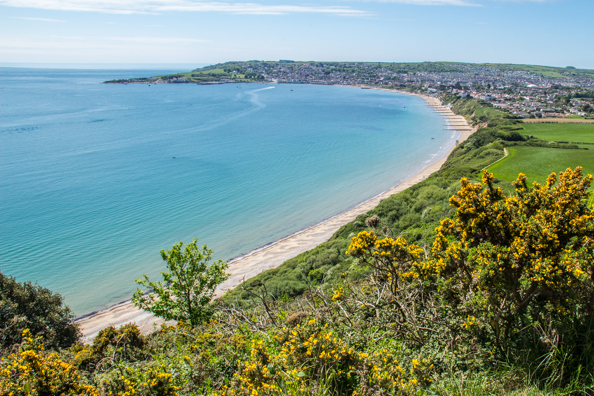
Attracted by the thought of a hearty breakfast in a sea front café I stayed on the bus until we reached the sea front. Breakfast was good but then I had a long walk along the road to get onto the coastal path. I should have asked the driver which was the best stop for access to this path. It had not taken me long to discover that bus drivers in Dorset know a lot about the place. Once I was on the path my progress was slow due to frequent pauses to appreciate the magnificent scenery that surrounded me. I followed the path to Old Harry’s Rocks where I spent some time savouring the cool breeze and admiring the bright yellow blooms of the gorse bushes that clung to the steep sides of the limestone cliffs – starkly white against the azure blue of the sea sparkling below. After a pause at the popular Bankes Arms pub on the outskirts of Studland village I continued on my way around Studland Bay where I caught the bus again.

Swanage on the Jurassic Coast in Dorset
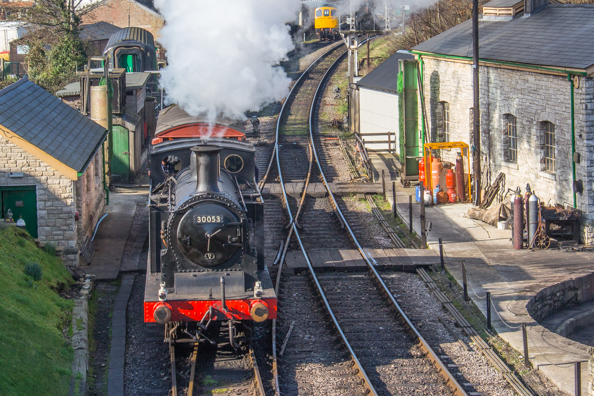
The bus station in Swanage is next to the train station – the steam train station. Few people can resist the shunting and whistling of a steam train in action. I had already spent a day travelling on the Swanage Railway but I still could not resist racing to the bridge over the line to watch a steam train set off for Corfe Castle Village. Corfe Castle is an integral part of the history of Swanage. After the castle was destroyed during the English Civil War Swanage became the focus of the Purbeck Stone industry and the town developed as an industrial port. The railway came much later when the town was developing as a tourist centre thanks to the prosperity generated by the stone industry. In those days Swanage was a difficult place to get to and railway access would ease the situation. The line was closed in 1972 and the track was lifted soon after. Around the same time a group of enthusiasts formed the Swanage Railway Society with the objective of rebuilding and reopening the line. Gradually the track was re-laid and sections of the line were re-opened and a regular summer service now operates between Swanage and Wareham.
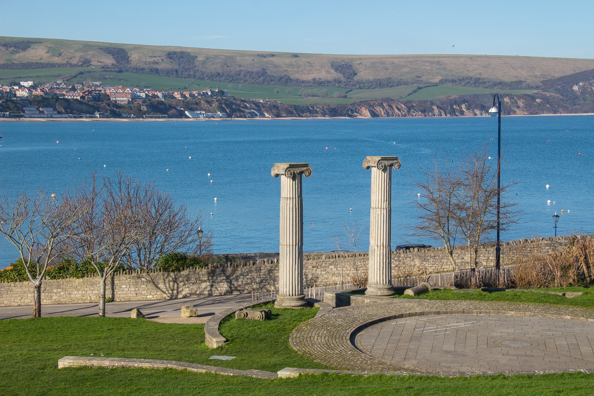
Turning away from the station I headed for the sea front where I discovered the King Alfred Monument. This monument commemorates a naval battle fought by Alfred the Great against the Danes in Swanage Bay. It features four cannon balls retrieved from the Crimean War. These days the creator of the monument in 1862 is probably more interesting than the monument itself. John Mowlem greatly influenced the history of Swanage. He and another son of Swanage, George Burt, made their fortunes in Victorian London transporting Purbeck Stone from Swanage to London by boat. Their company re-paved many famous London Streets. Trophies that Mowlem brought back as ballast in the empty boats still embellish the town. These include the façade of the Town Hall and the bizarre columns on the Downs above the town. These are replicas of those in the Athens Polias temple built 2,400 years ago.
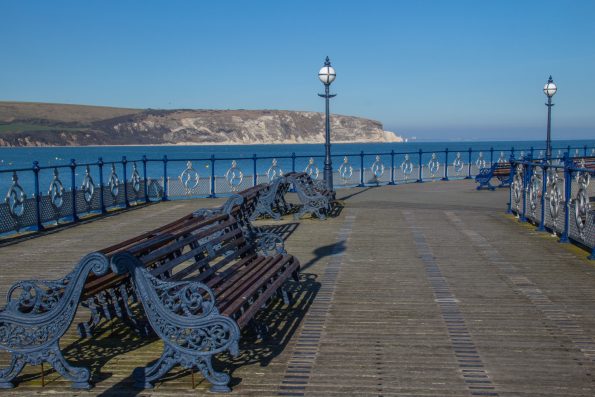
As I walked along the sea front I noticed some old tracks that had been used by the horse-driven trams to take the stone to the end of a pier constructed in 1859. Previously horse-drawn carts had pulled loads of stone into the shallow sea to be off loaded into boats. The boats were rowed out to larger ketches and the stone was lifted on board. The timber stumps of the old pier remain, alongside the existing pier that was built in 1895. This pier was built for visiting paddle steamers as the town was transformed into holiday resort. This was not the first effort to encourage holidaymakers to what was still a busy working port. The Stone Quay built by a local MP, William Morton Pitt, around 1825. Pitt also converted a mansion in the town into a luxury hotel now known as the Royal Victoria Hotel. This hotel was visited by Princess Victoria in 1833 before she became queen. A visit to the Swanage Pier starts with the little museum by the entrance to the pier itself. The pier itself is delightfully old-fashioned and beautifully preserved. It has been kept going by public donations and the efforts of the many volunteers who work there. From the end of the pier visitors get a clear view of the Jurassic Coast stretching beyond the town on both sides.
I could not leave town with sampling the famous Dorset cream tea. From the many options available I chose the Earthlights Café housed in a building with a history. The Arcade (1896) was built by G. R. Crickmay as an architectural showpiece with no particular purpose. Crickmay was involved in the design and renovation of churches in the area which may account for the vaulted ceiling. Very little has changed since it was built and it has the perfect ambience for this friendly little café.

Weymouth on the Jurassic Coast in Dorset
Weymouth was one of many seaside towns that flourished at the end of the eighteenth century when bathing in the sea was ‘discovered’ as a cure for tuberculosis and as being generally beneficial for good health. The patronage of King George III escalated the town’s popularity which rapidly expanded. Hotels, public houses and centres for entertainment crept along its sea front. It is still a firm favourite with all generations.
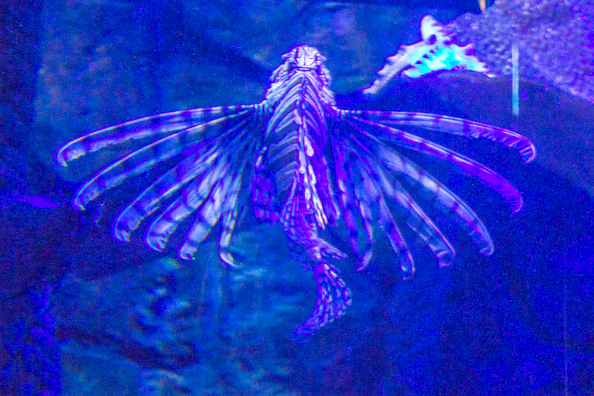
The joy of travelling there by bus is that a visitor can get off at one end of the long Esplanade and saunter slowly to the other end taking in the sights on the way. I started by visiting Lodmoor Country Park. Within this park a wide variety of activities that include a nature reserve, a miniature train, Sea Life and SandWorld. I started at Sea Life and was pleased to discover it was not just one big aquarium but a mixture of indoor and outdoor attractions and a daily programme of events. After walking through several aquariums and marvelling at the amazing sea creatures living in them – including some sea horses that resemble sprays of seaweed – I stopped to watch the Short Claw Asian otters having lunch. I stayed for a while watching their antics. Be sure to take a pop up beach tent if taking a day trip with children to protect them from wind and UV.
SandWorld is an incredible display of huge sand sculptures. It is a temporary exhibition featuring a different theme each year. Weymouth has a long history of sand sculpting as the sand from its beaches is perfect for this art. The main motivator behind the establishment of SandWorld was Mark Anderson an award-winning master sculptor. Mark learnt his craft from his grandfather, Fred Darrington. Fred began the tradition of sand sculptures on the beach at Weymouth during the early 1920s. A tradition his grandson continues to this day.

Greenhill Gardens are a blaze of multi-coloured blooms at the far end of the Esplanade. It is easy to while away an hour there enjoying the sea views and a snack from the café there. These gardens were built on private land in 1871 but were open to the public during the day. After they were given to the local authority in 1902 they have been extended and new amenities have been added. These include Stainforth Weathervane and the Floral Clock.

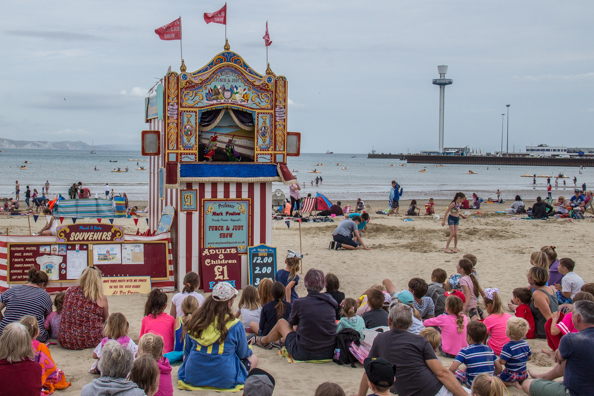
The sandy bay of Weymouth forms a sandy crescent in front of the town. Wild and natural at one extreme in front of the town centre it is crowded with families enjoying a traditional day out at the seaside including donkey rides, Punch and Judy and a helter-skelter. At the far end of the Esplanade is a small fairground. This fairground, the Alexandra Gardens Pleasure Grounds, replaced the original Alexandra Gardens that were destroyed by a fire in 1993. The original Alexandra Gardens featured a bandstand and a small theatre and was said to have been responsible for the decline in the popularity of the Pavilion. The Pavilion was completed in 1908 in response to a need to entertain the increasing number of visitors to Weymouth. Initially it was the only source of entertainment in the town. Since then this building has survived several changes of ownership and many threats of destruction and today it is a busy, lively venue for a variety of activities.

Weymouth harbour has two piers. One is the Pleasure Pier and the other is the site of Nothe Fort also known as North Fort. A regular ferry service crosses between the two but I chose to walk across the lifting Town Bridge. This bridge, the sixth to be built to link Weymouth with Melcome Regis (now a suburb), lifts regularly to allow tall shipping to pass through to the Marina on the other side of it. It was a pleasant stroll along the water’s edge. I was amused by the efforts of parents and children trying to catch crabs before I turned off to walk through the Nothe Gardens. These gardens slope down to the edge of the cliff and I was able to appreciate the strategic position of the fort and the entrance to Weymouth Harbour. It was built to protect Portland Harbour further along the coast. The original building was constructed on three levels comprising ramparts, gun decks and a maze of underground passageways. During the Second World War it was adapted to deal with modern warfare. The establishment of this fort as a major attraction in Weymouth was truly a labour of love and has been well-documented. Volunteers have been vital to the process and continue to be so as they are the people who are responsible for running the fort on a daily basis.

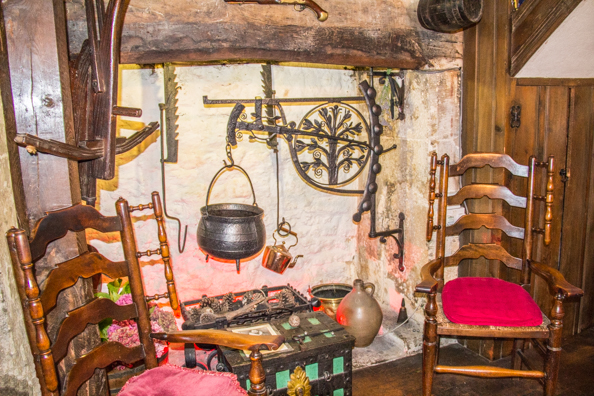
On my way back to the bus stop I walked through the town and happened upon a real treasure, the Tudor House Museum. Built at the beginning of the seventeenth century it is a typical home of the Tudor period. The present building was one of a pair of houses but during its restoration by a local architect it was converted to one building. Today, Weymouth Civic Society own the house which is open to the public and staffed by enthusiastic volunteers. I felt honoured to be treading these passages of time both in the towns and by the sea of the Jurassic Coast.
A career break from the legal profession resulted in a career change and since then I have been travelling the world as a tour leader. I started writing about my experiences in 2008 and I have my own blog as well as writing regularly for other websites. I love blogging as it is instant and a great way to showcase my photography – another passion of mine. I write honest accounts of my experiences in the hope they will inspire other travellers. You can read my online travel journal at https://experiencedtraveller.com