Last Updated on August 4, 2026 by Editor G
One thing I love doing in Thailand is just aimlessly walking around and coming across unusual things, especially in the larger cities like Bangkok. I can easily rack up 10 miles a day in 30 degree heat, obviously stopping for a pad krapow and a Chang along the way. I probably spend the most time looking at the various spirit houses (shrines) I come across; everyone is totally unique and quite bizarre when you come across them for the first time.
Thailand is a land of mystique, culture, and tradition, and few things capture the essence of Thai spirituality like the ubiquitous spirit houses that can be seen in front of homes, businesses, and even large modern buildings. Known as san phra phum, spirit houses are small shrines that serve as a home for spirits who guard the land.
I wrote this article after doing more deep research and speaking to locals, as I initially thought they were Buddhist shrines. We’ll look into the history, significance, and rituals surrounding these captivating shrines, providing insights into why they remain so important in Thai culture.
Origin of Thai Spirit Houses
The tradition of spirit houses dates back centuries, long before the arrival of Buddhism in Thailand, and is related to animism.
Thai animistic beliefs are deeply rooted in the country’s cultural and spiritual traditions, predating the arrival of Buddhism. Animism, the belief that spirits, or phi, inhabit all aspects of the natural world—trees, rivers, mountains, and even particular locations—continues to be integral to Thai spirituality.
Thais believe that these spirits influence daily life, and to maintain harmony, they offer respect and reverence through rituals and offerings. Spirit houses are one manifestation of these beliefs, serving as dedicated spaces where spirits can dwell peacefully without interfering with human activities.
These beliefs have adapted over time, blending with Buddhist and Hindu elements to create a unique spiritual landscape where both religious and animistic practices coexist. I see many people saying Buddhism and spirit houses are entirely separate, but I have seen Buddhist monks at spirit houses and photographed them (see below).
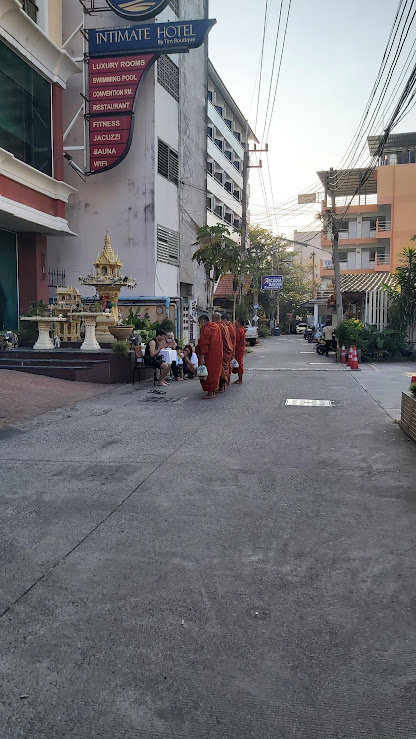
Copyright: Travelbusy.com – Buddhist monks paying respect to a spirit house in Pattaya
Even today, animism remains present in Thailand’s modern society, as many Thais continue to seek protection, guidance, and blessings from the spirits around them, illustrating a profound respect for the unseen forces they believe shape their world. Thais also fear bad spirits; I’ve heard stories of them turning their bike lights off at night so bad spirits don’t follow them home (and met numerous farangs that have been hit by bikes with no lights on)!
Spirit houses are often built under the guidance of monks or a mor phi (spirit expert), who chooses an auspicious location for the shrine. Many Thais view spirit houses as complementary to Buddhism, believing that appeasing spirits and receiving their protection can help them lead a harmonious life.
Where Are Spirit Houses Found?
In Thailand, spirit houses are omnipresent. They can be seen in front of homes, shops, hotels, and temples, and even on large corporate properties. From bustling Bangkok streets to rural villages, the sight of these shrines adorned with offerings and garlands is a daily reminder of the Thai respect for the spiritual world.
Each spirit house is carefully positioned, typically in a corner of the property or near the main entrance, to welcome or appease spirits entering or residing in that area.
Different Types of Spirit Houses
There are several styles of spirit houses, each with its own design and significance. The most common types are:
- San Phra Phum: The “spirit of the land” house, often built like a small temple, with pillars and a roof.
- San Jao Tii: A simpler style designed for spirits who inhabit a particular location.
- San Jao Maaree: Dedicated to female spirits or spirits of the family, this type is sometimes smaller and designed for offerings specific to a family’s ancestors.
Each type of spirit house serves a unique purpose depending on the spirits it is meant to house or appease, and their designs can vary from simple wooden structures to elaborate shrines adorned with intricate carvings and vibrant decorations.
Offerings to Spirit Houses
To keep the spirits happy, Thai people offer daily gifts to their spirit houses. These offerings are often specific and symbolic, reflecting what spirits are believed to enjoy or appreciate. Among the most common items you’ll see are fresh flowers, incense, rice, and other small food items. However, some modern and more unique offerings have emerged:
- Red Fanta: One of the most recognizable offerings is red Fanta soda. This tradition arose from the belief that spirits are fond of sweet drinks, and the red color is often associated with blood, symbolizing vitality or life force. Red Fanta has thus become a respectful and symbolic offering.
- Zebras: Small statues of zebras are another curious sight among spirit house offerings. It’s believed that the zebra statues originated from the time when a temple in Bangkok was being renovated. Worshippers would pray to the spirits, hoping for safety and success in the renovation, and left zebra statues as offerings after their prayers were answered. The tradition caught on, and now zebras are commonly left as an offering symbolizing protection and blessings for successful endeavors.
The Meaning of the Figures Inside Thai Spirit Houses
If you look closely at a Thai spirit house, you’ll notice it’s much more than an empty shrine. Most are filled with miniature figures, furniture, animals, and decorative items, all intended to create a comfortable home for the spirits believed to reside there. These figures aren’t randomly chosen—they each have a symbolic meaning and purpose.
The Guardian Spirit
The most important figure is the guardian spirit (Phra Phum), who is believed to protect the land and everyone living or working on it. This figure is usually dressed in traditional Thai royal clothing and stands at the centre of the shrine. In larger spirit houses, there may also be a second figure representing the guardian’s consort or an attendant spirit.
Human Figures
Many spirit houses include miniature people, which act as servants or companions for the guardian spirit. These figures may include:
- Male and female attendants
- Traditional Thai dancers
- Musicians
- Elderly figures
- Children
The idea is that the spirits should have everything they need to live comfortably, just as humans do.
Animal Figures
Animal statues are among the most recognisable items found around Thai spirit houses.
Elephants are the most common. They symbolise strength, loyalty, wisdom, and royal power, making them fitting companions for the guardian spirit.
Horses represent transport and status. In the past, horses were an important means of travel, so miniature horses are provided to allow the spirits to move freely.
Roosters are often placed at spirit houses because they symbolise vigilance and protection. Their crowing is believed to ward off evil spirits and announce the arrival of good fortune. In some regions, they are also offered after a prayer has been answered.
Miniature Furniture and Everyday Objects
To make the spirit house feel like a real home, many shrines contain tiny furniture and household items, including:
- Tables and chairs
- Beds
- Benches
- Vases
- Food trays
- Water jars
These items symbolically provide comfort and hospitality for the resident spirits.
Dancers and Performers
One of the most distinctive offerings is the traditional Thai dancing figure. If someone’s wish is granted, they may fulfil a promise by hiring real Thai dancers to perform at the shrine or by placing miniature dancer figures inside the spirit house. These dancers represent celebration, gratitude, and respect for the spirits.
Why So Many Figures?
The purpose of all these miniature figures is to create a complete and welcoming home for the guardian spirits. According to Thai belief, contented spirits are more likely to protect the property, bring prosperity, and keep misfortune away. Over time, additional figures are often added as thank-you gifts when prayers are answered or milestones are celebrated, meaning no two spirit houses are exactly alike.
For visitors to Thailand, these tiny scenes offer a fascinating glimpse into the country’s unique blend of animist beliefs, Buddhist traditions, and everyday cultural practices. Every statue tells a story, and together they reflect the enduring Thai belief that the spiritual and physical worlds exist side by side.
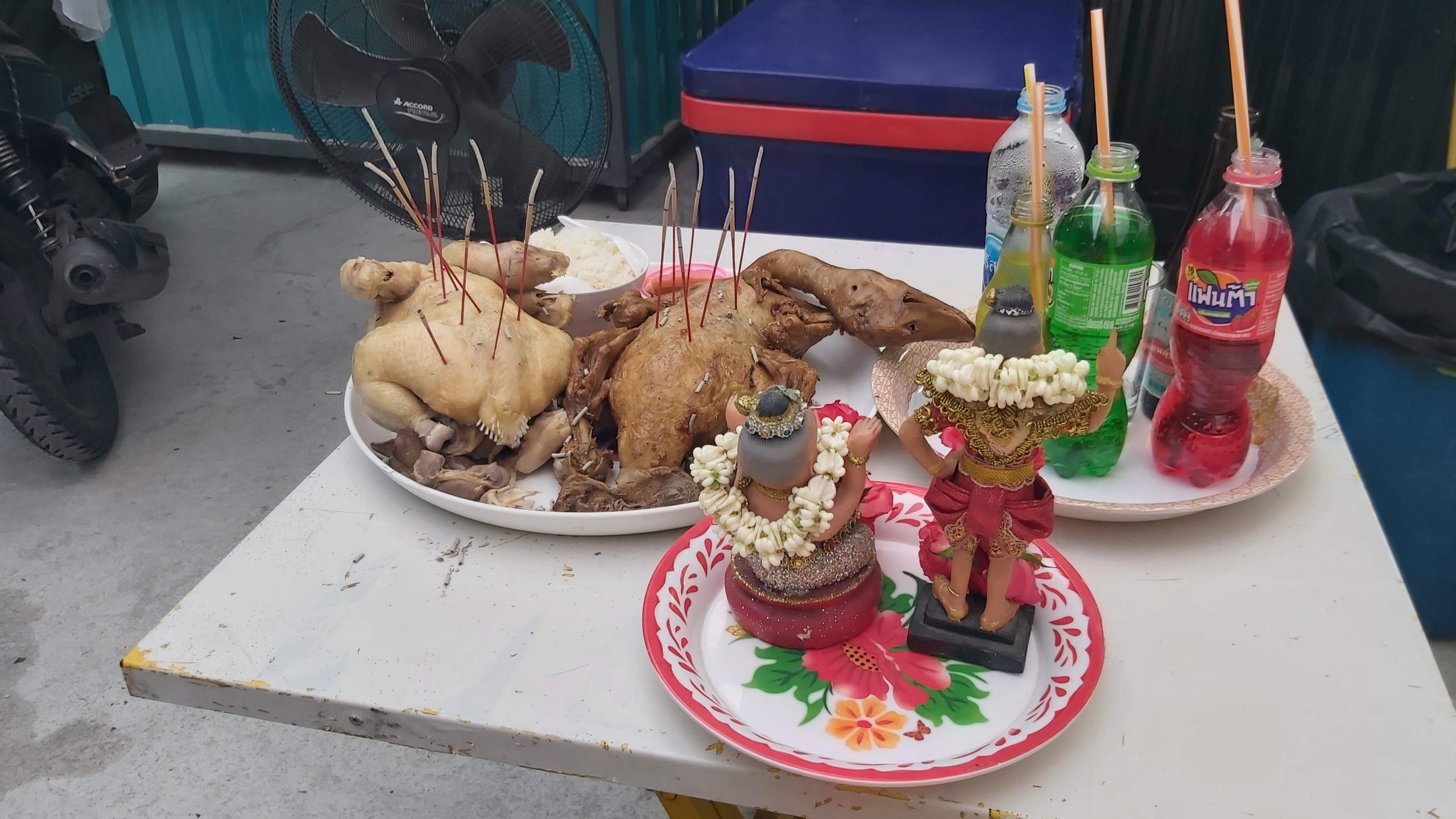
Copyright: Travelbusy.com – Spirit house offerings at a shrine in Bangkok
How Are Thai Spirit Houses Set Up?
The process of setting up a spirit house is deeply rooted in ritual and requires careful planning and guidance. When a new spirit house is to be installed, a ceremony is often held. A monk or spirit expert determines the exact location based on principles of feng shui and auspicious timing. The spirit house must not face toward the main building, as it is believed the spirits prefer to watch over the property without directly confronting those living or working there.
The spirit house is typically placed on a pedestal and oriented in a respectful direction, often facing east or north. After setting it up, offerings and miniature figures (like elephants, horses, or dancers) may be added to make it inviting for spirits. Once the spirit house is in place, it becomes a sacred object, and the household or business regularly maintains and respects it, continuing to make offerings to keep the spirits content.
Thai spirit houses offer a captivating glimpse into Thailand’s blend of animism, Buddhism, and cultural traditions. They are not only symbols of respect for the spiritual realm but also serve as daily reminders of Thailand’s rich heritage and the importance of harmony between the material and spiritual worlds. If you’re visiting Thailand, be sure to observe these shrines and appreciate the cultural layers they represent in this remarkable country.

Gareth Evans is a travel writer and entrepreneur living life as a digital nomad. Gareth is currently living and working in Thailand.