Last Updated on January 20, 2018 by Editor G
São Miguel island
Explore Ponta Delgada
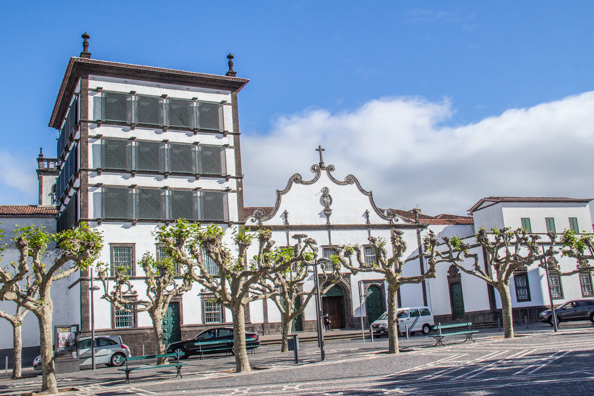
Ponta Delgada is the capital of the island of São Miguel the largest island in the Azores. Driving from the airport to my hotel I was immediately impressed by the simple black and white buildings around the town. The town has inherited its architectural style from Portugal. The Azores are an autonomous region of Portugal and therefore linked with its history and culture. This includes the expulsion of the Jesuits who were responsible for the construction of many important churches and convents on the islands. Some of these still operate as churches and some have been converted other uses such as museums. Stroll around the historic centre of this lovely town to appreciate some of these old buildings. In particular the Convent and Chapel of Nossa Senhora da Esperança. A large, square tower makes the convent very distinctive. Next to convent is its chapel, famous for being the centre of the cult of the image of Santo Cristo dos Milagres (‘Jesus Christ of the Miracles’). The statue that they worship is kept in the chapel behind an iron lattice. Worshippers stand in respectful silence in front of the illuminated statue. A memorable moment for me.
Find Some Fumaroles
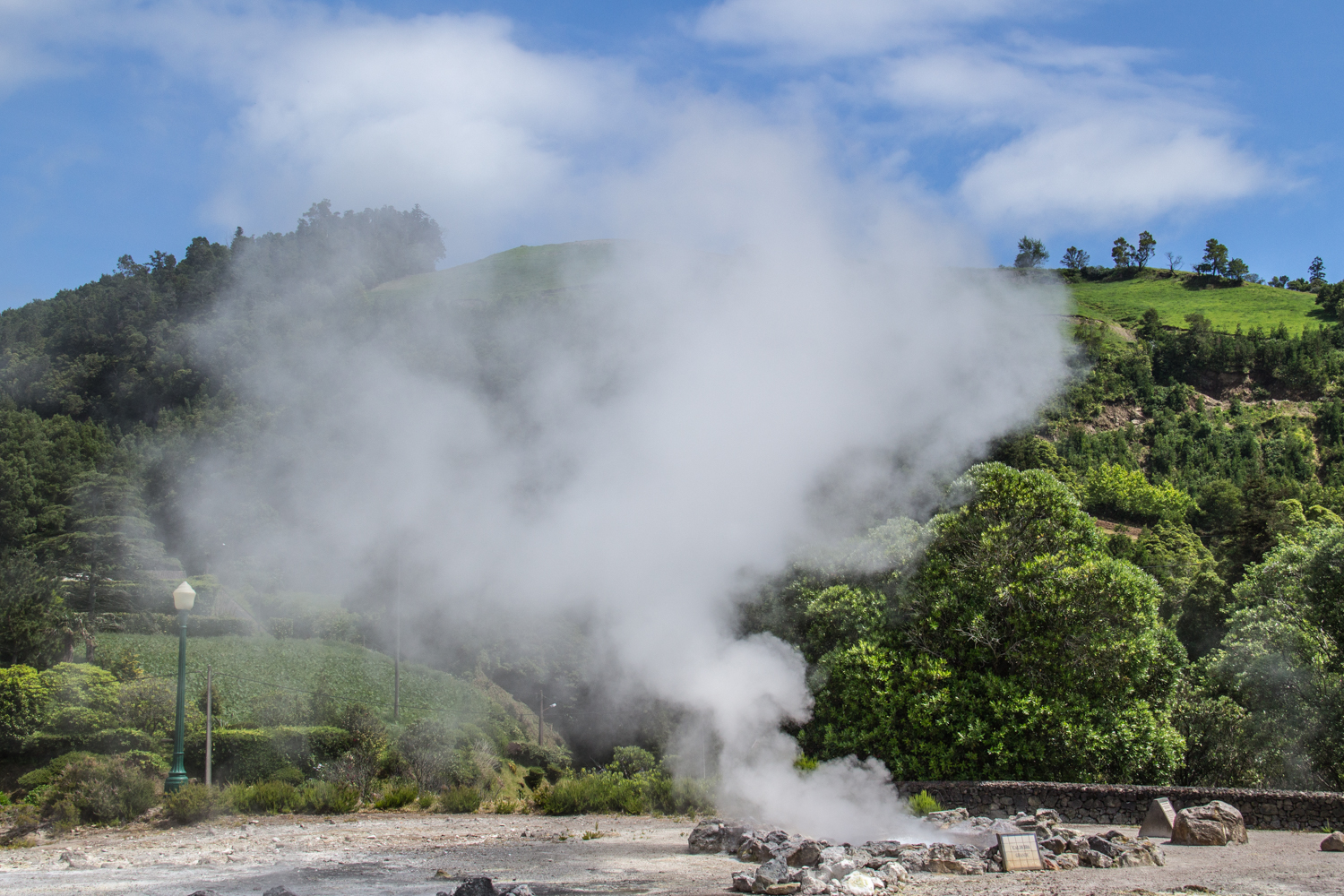
The Azores are volcanic in origin and the islands are display evidence of their origins everywhere. In the Furnas Valley plumes of steam float out of the limestone rocks that surround Lagoa Furnas, a crater lake. These fumaroles provide enough heat to cook a meal and that is exactly what the locals do. Cozido das Furnas is a traditional stew that is prepared in a large pot that is then buried in the ground. The stew cooks slowly for several hours before it is ready to eat. Many of the local restaurants in nearby Furnas. I discovered more fumaroles in the Furnas Volcano Caldera. Here they were puffing out steam and bubbling up through the little rock pools creating a very dramatic landscape. In places the heat was quite intense – enough to steam up the lens of my camera.
Test the Thermal Waters
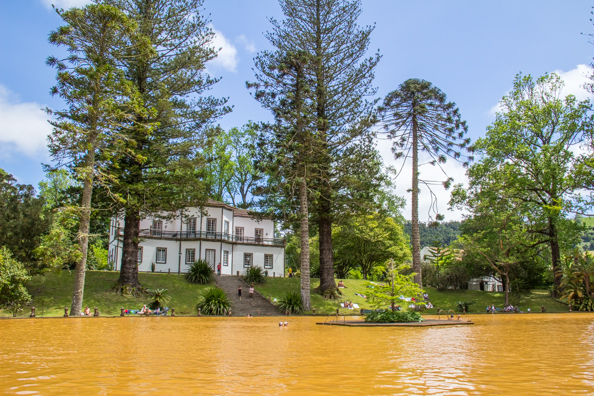
Thermal springs are another characteristic of a volcanic landscape. In the Parque Terra Nostra also in the Furnas Valley one of these springs feeds into a large pool. The gardens around the pool date back to the end of the eighteenth century. Then, the pool was much smaller. Due to the growing interest in the use of mineral waters to treat health problems the pool has been enlarged. Facilities are provided for changing and showering after lounging in the waters. Failure to shower results in the skin acquiring an unusual shade of brown – the waters themselves are opaque and brown. After dipping my feet in the waters I went off to explore the gardens. These were originally planted by Thomas Hickling, the original owner, who surrounded the house and pool with trees, mainly from North America. Successive owners have continued this tradition, planting trees from all over the world, and creating a glorious garden. Today these gardens are a delightful mix of trees and flora typical of the Azores. I enjoyed wandering along the paths bordered by a variety of habitats.
Taste the Pineapple
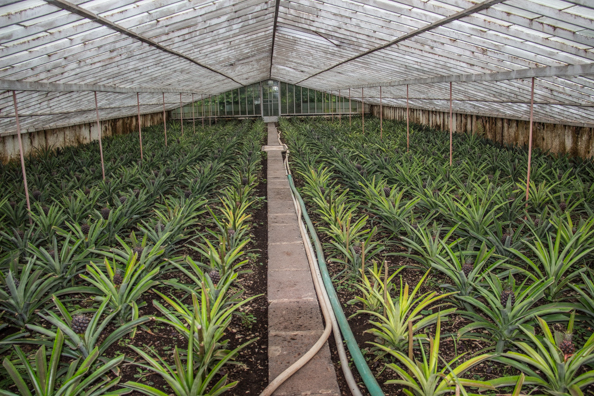
Geographically placed at the cross-roads of Europe, Africa and America and the fertility of its soil resulted in the rapid economic growth of São Miguel. The island became very wealthy by exporting oranges to England. Then, in the mid-nineteenth century the orange groves were destroyed by a blight. But the islanders are resilient and were soon experimenting with new crops. Contacts with Brazil led to experiments growing pineapples. Initially these plants did not like the variable climate but responded well when they were grown under glass. At A. Arruda Pineapple Plantation. São Miguel is the only place in the world where pineapples are grown under glass. It takes two years for the fruits to ripen. During the process small fires are lit in the greenhouses. This stimulates growth and discourages pests as pesticides are not used. The plantation has a small shop where visitors can try pineapple flavoured jams, chutney and liqueurs. I had some pineapple for my dessert one day. The local fruits have an exquisite sweetness. Sadly, many of the hotels serve pineapples imported from Brazil.
Faial Island
Whatch the Whales and Dolphins
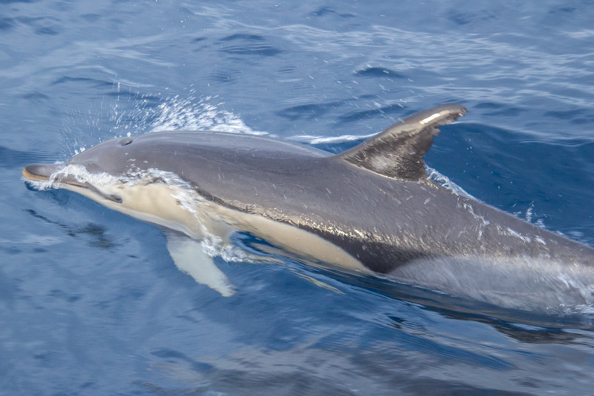
Whale and dolphin watching are popular activities from Faial Island and promise a 97% success rate. I was beginning to think I was one of the 3% as we bounced across the rippling grey waters of the Atlantic Ocean gazing anxiously at an empty horizon. Then the engines were cut and the crew pointed to plumes of spray. As I watched the dark grey hump of a Fin Whale broke the surface of the water. The Fin Whale is the second largest mammal in the world, the blue whale is the largest. The whales never came right out of the water but it was still possible to appreciate how large they are. We watched them surfacing and diving – spellbound – until the crew said we had to move on. On the way back to Horta harbour our boat was surrounded by a school of Common Dolphins. They swam under the boat and came alongside it sometimes jumping clean out of the water. It was a great show.
Learn About the Capelinos Volcano at its Interpretation Centre
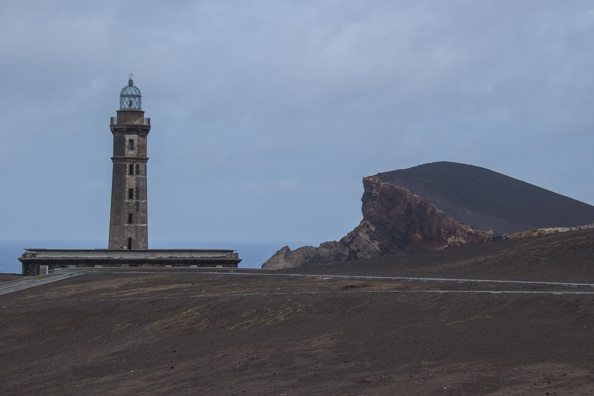
I knew that the Azores were formed by volcanic activity but I was not sure exactly what that meant until I visited the Capelinos Volcano. This volcano is unique as it is the first time the entire eruption of a volcano has been documented from beginning to end. The eruption lasted thirteen months. This eruption caused massive devastation on the island yet the lighthouse next to it survived intact. Initially the eruption formed a small island. Later this became connected to Faial Island by an isthmus formed by more volcanic activity. The lighthouse has been developed as the Capelinos Interpretation Centre. An exhibition has been established underneath the building to preserve the volcanic landscape that surrounds it. The barren landscape still bears the scars of the eruption that destroyed the economy of Faial Island.
Taste the Cheese
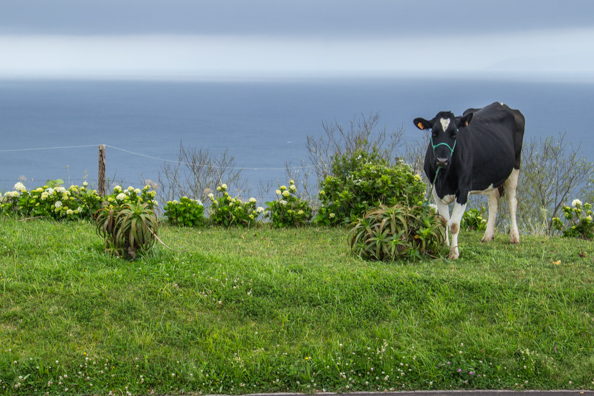
It is not only the architecture of the Azores that is black and white. Its lush green pastures are speckled with the black and white Holstein Friesian cows. This breed of cattle is agile on the slopes of the mountainous island and produces good quality milk. Delicious local cheeses are produced from their milk. I visited Queijaria O Morro a family-run cheese factory. I was invited to sample the eight varieties of the soft, tasty cheese they produce here. The best-known Azorean cheese, São Jorge, is made on the island of the same name. This unpasteurized cheese is aged to produce different flavours including a mature, extra strong cheese similar to a cheddar. It is often served as a starter with fresh bread. I would have been happy to make a meal of it.
Visit Horta
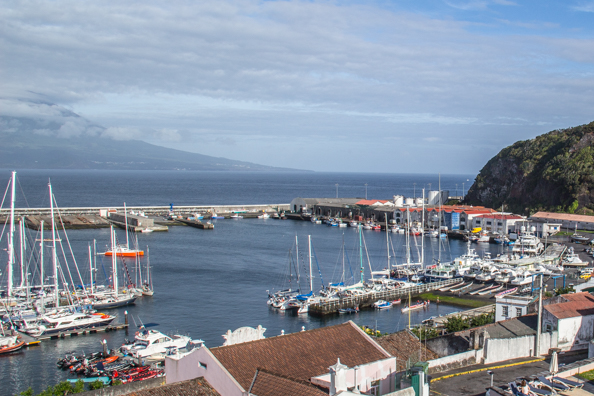
As Horta has always been a stop-over for Trans-Atlantic shipping it is has developed its own unique character. It is customary for ships docking in the harbour to paint a picture on the walls and rocks that surround the harbour. The superstition has grown up that this will ensure a safe onward journey when the ship leaves the harbour. During the sixteenth, seventeenth and eighteenth centuries the Port of Horta was an important anchorage for galleons on their way between Europe and the Americas. Today fashionable yachts lay at anchor there. At the far end of the marina is the Fort or Castle of Santa Cruz. When this fort became redundant as a defence it was classified as a national monument and later converted to a luxury hotel, Pousada de Forte de Horta but it is referred to locally as the Pousada de Santa Cruz. Traditionally sailors arriving in Horta have gathered at Pete’s Sport Café and, in particular, have a gin and tonic there. Why gin and tonic? It was due to the influence of the British workers employed by the telegraph cable companies during the nineteenth century. It is still popular today and I discovered it has a great ambience.
Pico Island
Stroll through the Lava Fields
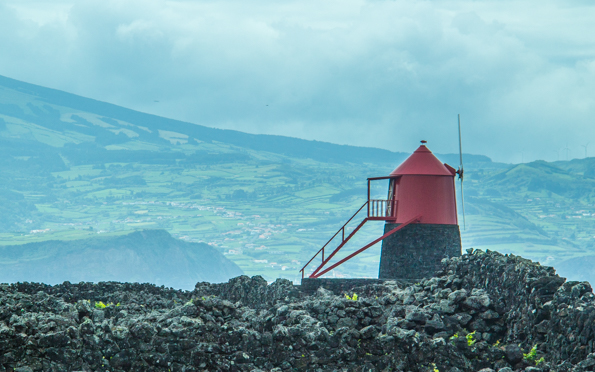
The most famous heritage of Pico Island is its unique landscape of viticulture. The maze of dry stone walls constructed from blocks of lava shelter small plots of land in which the vines are planted. These small plots make up one of the biggest stone networks constructed by man. For this reason the area was classified as a UNESCO World Heritage Site in 2004. This method of cultivating the vines is so labour intensive the practise was dying out but recently it has seen a revival. I had a bird’s eye view of these intricate small plots or currais from the top of a windmill. The islands are dotted with windmills, a legacy from early Flemish settlers. For two centuries the wine produced in these vineyards was exported to the royal courts of Europe. I also walked around the Museu do Vinho. Housed in an old Carmelite Convent this museum relates the history of viticulture on the island.
Go Back in History at the Whaling Museums
Pico Island boasts two whaling museums both very interesting and yet very different. The Whale Industry Museum in San Roque is housed in the factory building that was used to make products from the whales. Whale hunting was banned in 1984 but the whale hunters in Pico continued for three more years in protest at this ban. In reality the industry was already dying a natural death due to the decline in the use of oil from the blubber. The whale hunters were courageous men going out in rowing boats that were smaller than the mammals they were hunting. They used spears to kill the whale out at sea before towing the carcass back to the shore. The islanders are still building the wooden boats but now they are used for recreation and racing. Museu dos Baleeiros is located at the old warehouses of the whaling boats. This museum features a room of Scrimshaw. This is the art of adorning ivory, bones or shells with carved, sketched or coloured designs. This intricate art is particularly associated with the whalers of Pico.

A career break from the legal profession resulted in a career change and since then I have been travelling the world as a tour leader. I started writing about my experiences in 2008 and I have my own blog as well as writing regularly for other websites. I love blogging as it is instant and a great way to showcase my photography – another passion of mine. I write honest accounts of my experiences in the hope they will inspire other travellers. You can read my online travel journal at https://experiencedtraveller.com