Last Updated on February 24, 2017 by Valery Collins
Food Glorious Food
Food in Tallinn covers the whole spectrum from comforting bread to haute cuisine and often in the same meal. Dinner at MEKK was my first introduction to the famous black bread. Black bread can take many forms and is even for desserts, flavouring ice-cream and as an accompaniment to crème brûlée. MEKK means the taste or the essence of Estonian cuisine. A cuisine that has taken the best from all the nations that have occupied or controlled this country – Sweden, Denmark, Germany, Finland and Russia.
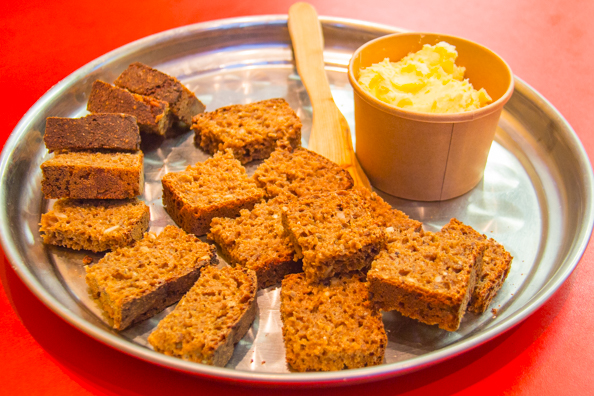
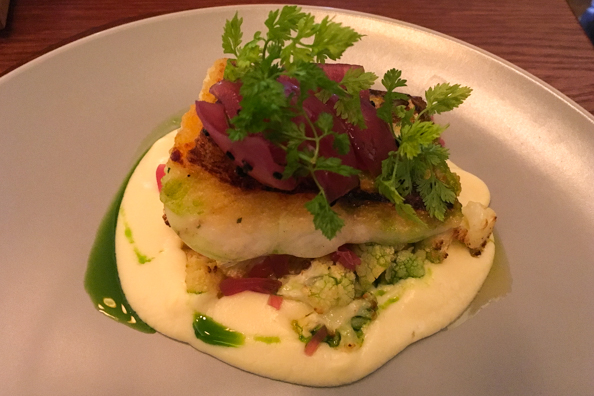
Leib means black bread and Restaurant Leib resto ja Aed was given this name in homage to Estonia’s favourite food. It reflects the objectives of the restaurant – fresh, warm, simple and honest. Simple Estonian ingredients are used here to create seasonal menus. This restaurant bakes its own bread with seeds and it has a slightly sweet taste. The menu features produce of the season and is therefore not extensive. I selected the pan-fried pike perch with cauliflower cream, marinated onions and chive oil. It was delicious. I chose a hand-crafted Hopster beer to go with my food. Estonia is currently enjoying a revival in the brewing of beer. A tradition, it is claimed, goes back to the days when it was safer to drink beer than the water.
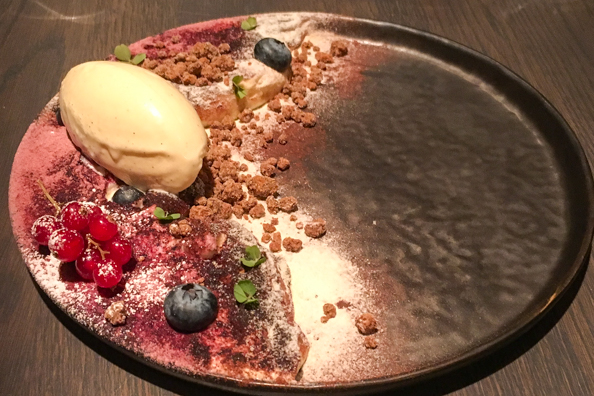
Restaurant Tuljak was a favourite restaurant of the sixties when the Russians occupied Estonia. It has recently been extensively restored and is once again a stylish restaurant. It has a large terrace overlooking the sea – ideal for summer night dining. The menu refers to its former glory days of when it was known as Carina. Then it served generous sandwiches and handmade waffles filled with butter and Cognac cream. The food was fabulous. My dessert, tiramisu Tuljak featured a favourite of the Estonian diet, the blueberry. One of their superfoods. Blueberries grow everywhere in Estonia. Reputedly they have a more intense flavour than those that grow in other countries.
In Restaurant Fabrik a magnificent display of home-made pastries made me wonder if I could order a different pastry for each of my three courses. Fabrik has won an award for casual dining but clearly this relates to its informality as the dishes were complex and delectable. I had the lamb which was really good. I chose a local cider, Metsik Kratt Õunasiider peninuki napsukoda, to drink. Peninuki began as a domestic brewery dedicated to producing non-traditional cider. This light, sparkling liquid is made in gin barrels and complemented my meal perfectly.
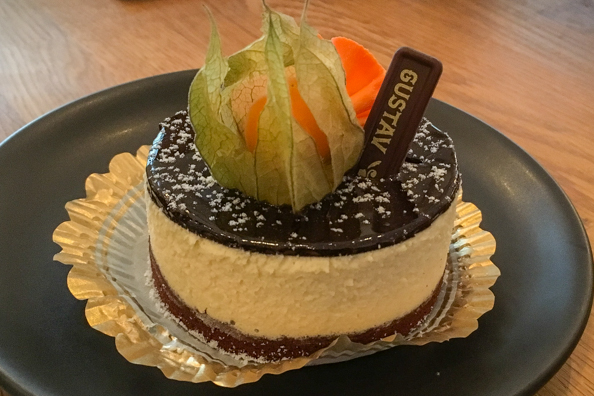
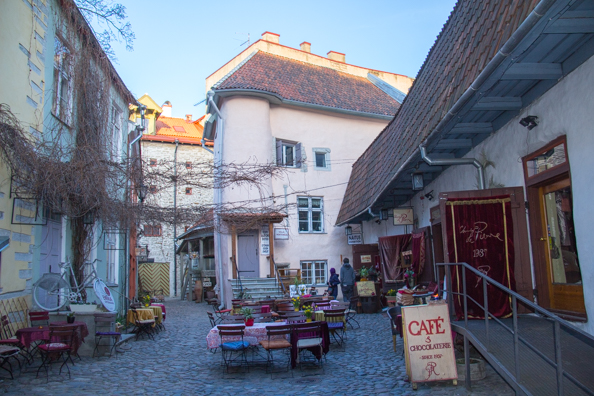
A final food fling was afternoon tea featuring home-made chocolates. This was a must once I had spotted the Chocolaterie in the corner of the Masters Courtyard. This courtyard is also the site of some of Tallinn’s oldest houses.
Extraordinary Exhibitions
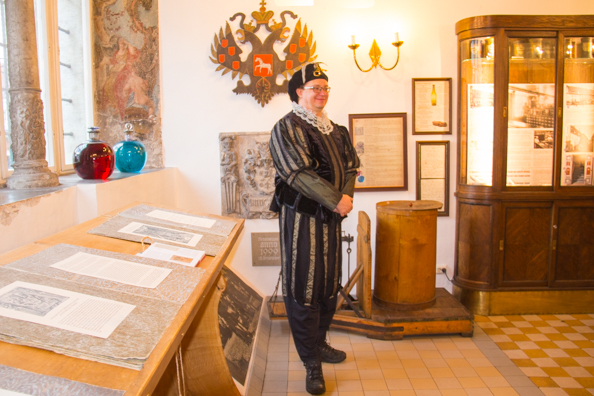
Estonians have a passion for museums resulting in some interesting exhibitions housed in a diverse collection of buildings scattered around its capital city. Raeapteek in the Town Hall Square is the oldest pharmacy in Europe that has continuously carried on its business in the same building. Our guide in the pharmacy, appropriately dressed in period costume, enthralled us with tales of its history as we sipped klarett and munched marzipan. Both items were once claimed to be medicinal.
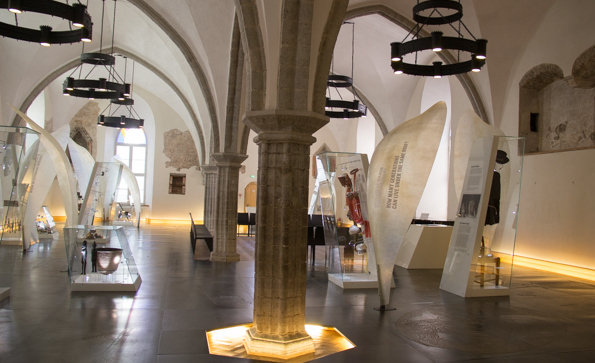
The Estonian History Museum is housed in the historical Great Guildhall in the old town of Tallinn. This elegant building was commissioned by an association of Hanseatic merchants known as the Great Guild. For centuries it was the centre of social, commercial and judicial proceedings. Now it houses a permanent exhibition “Spirit of Survival”. An exhibition spread over several different rooms each featuring a different topic associated with the story of Estonia.
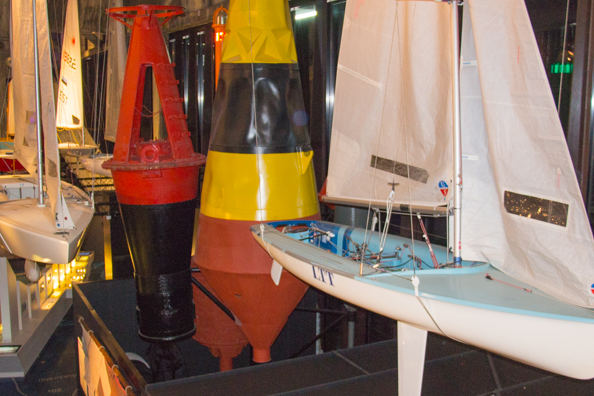
On Seaplane Harbour the Estonian Maritime Museum is housed in a unique building – a seaplane hangar that is now one of the most treasured building in the Baltic States. It features four different environments associated with the sea and each features relevant exhibits including the submarine Lembit in the underwater section. In the harbour outside the museum is the one-hundred-year old the century-old steam-powered icebreaker Suur Tõll. Once one of the world’s most powerful icebreakers.
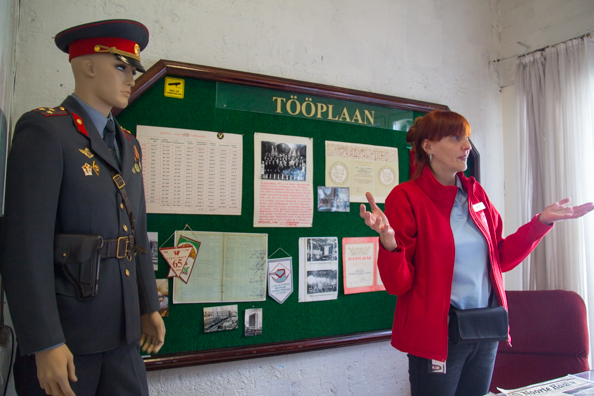
The national art gallery Kumu, is a fascinating insight into the way in which different political situations affected the art at the time. But the most entertaining museum is the KGB museum on the top floor of the Hotel Viru. This was where the KGB were based and spied on the people who stayed there. Our guide, Maire, said she had worked in the hotel as a floor keeper during the Russian occupation. Her eloquence in English suggested otherwise but who knows?
Hanseatic Heyday
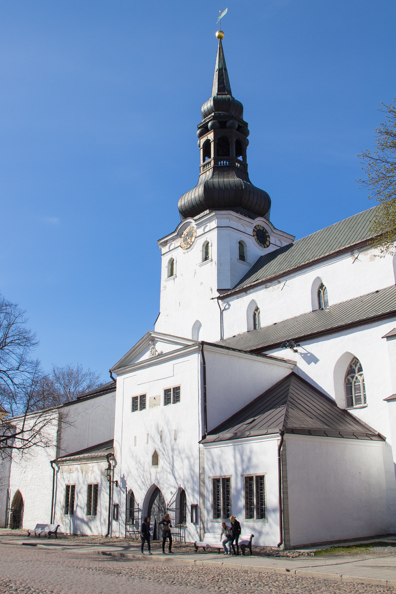
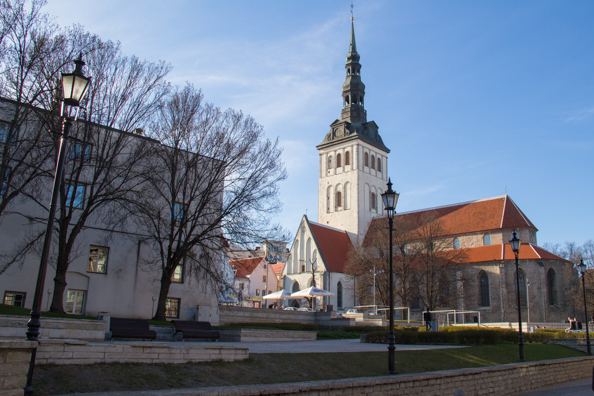
During its chequered history Tallinn was established as a fortified town of two parts. The leaders governed from the castle on Toompea Hill while the followers, had to establish their own settlement as there was no room on the hill. Each of the two, the Upper Town and the Lower Town, had its own laws and its own cathedral. The cathedral of Saint Mary the Virgin, also known as the Dome Church, in the upper town has retained its status. But the Lower Town cathedral is now known as the church of Saint Nicholas. During the Middle Ages it was one of the town’s most magnificent and beautiful churches the prosperity of the local merchants based in the Lower Town that had resulted from membership of the Hanseatic League. Valuable works of commissioned art were displayed here including the only version on canvas of the Danse Macabre by Bernt Notke. This church is now the home of Niguliste Museum, a branch of the Art Museum of Estonia. It has the largest and most significant collection of ecclesiastical art from the Medieval and Early Modern periods in Estonia.
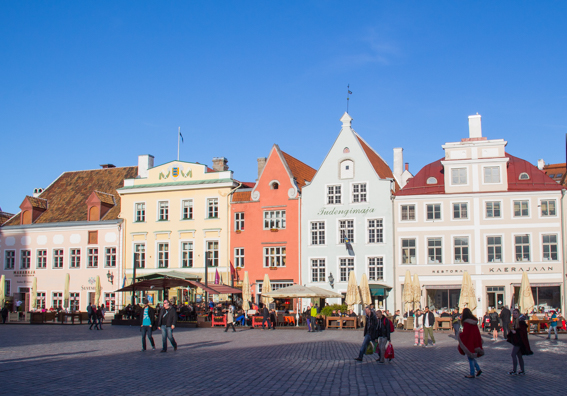
The Town Hall Square has always been the most important square in the Old Town of Tallinn. Merchants’ houses (also business premises) built during the time Tallinn was a Hanseatic town form a colourful fringe round the cobbled centre. The Gothic Town Hall in the centre of the square was built at the beginning of the fifteenth century as a meeting place for the ruling burgomasters or mayors of the city. It is the only complete Gothic town hall in Northern Europe and is now used for entertaining visiting kings or presidents as well as a venue for concerts.
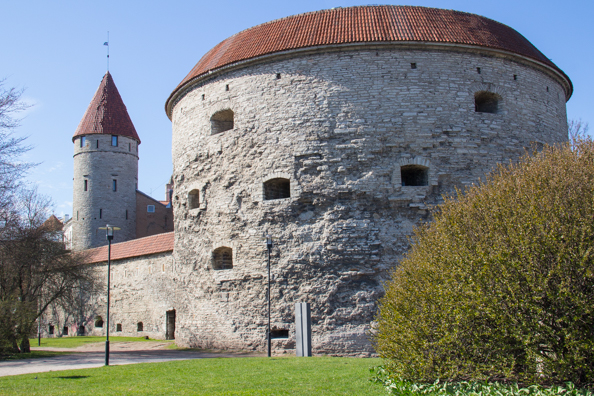
Tallinn is famous for its medieval city walls and fortifications. The Great Coastal Gate and the Viru Gates, are the only two remaining gates of the six gates that controlled access to the town in medieval times. Four floors of the historic Fat Margaret cannon tower now house the Estonian Maritime Museum. Twenty-one of the original sixty-six defence towers have survived until now. The completeness of its Medieval town led to it being designated a UNESCO World Heritage site. Most medieval defences included passageways connecting its bastions. One of the towers, Kiek in de Kök stands at the entrance to the bastion passages. These passages have been used for a variety of purposes over the years. They have housed a church, a prison, refugees, the homeless, been used as a bomb shelter and were modified to be used as a bunker – if necessary. Since 2007 these tunnels have been open to the public but only for guided tours. However, individuals can visit the section that houses the Carved Stone Museum. On display here, for the first time, are stones from the original houses of Tallinn.
Russian Heritage
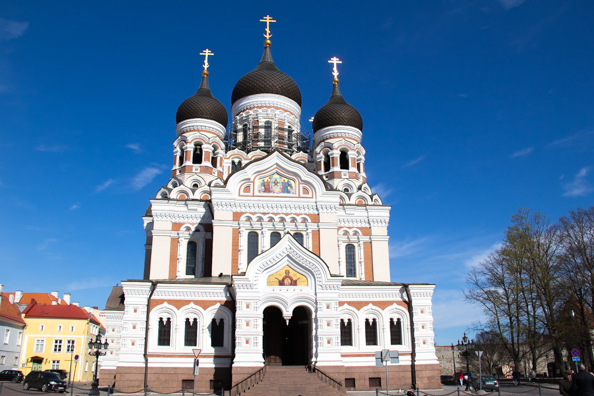
During two periods of occupation the Russians certainly left their mark on Tallinn. The most impressive Russian building and Estonia’s most important Russian Orthodox cathedral the Alexander Nevsky Cathedral. The Russians built their cathedral on the same place where a statue of Marin Luther had once stood. It overshadows Toompea Castle, the seat of the Estonian government. Its purpose was to symbolise the religious and political domination of Russia. The cathedral is dedicated to the Prince of Novgorod, Alexander Yaroslavich Nevsky, who halted the German crusaders’ eastward advance. Nowadays it is simply an architectural masterpiece with a powerful peal of bells.
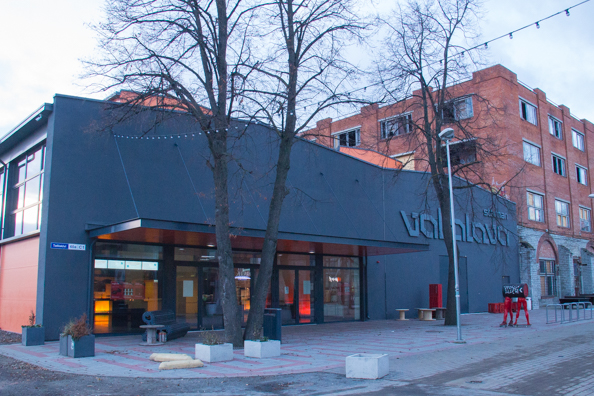
In other areas, such as the Rotermann Quarter their legacy was the neglect of some impressive industrial building. The Rotermann Quarter is currently receiving a face-lift and the old industrial buildings are being tastefully modernised and turned into apartments, offices, shops and cafés. Another project is reviving abandoned industrial buildings. Telliskivi Creative City is based in a complex of Russian-built factories. This complex, now in private ownership, is part of an initiative to make industrial waste-lands great again. The Creative City, an initiative that started in 2007 has become a popular meeting place for young creatives. Housed in the ten buildings are a new theatre, workshops, offices, shops and a gym. There is a flea market here every Saturday and during 2016 it hosted over five hundred different events attracting more than seven hundred thousand visitors. Tenants are hand-picked as substance is important to the project and each tenant must add value to the project and the community. It is a profitable model that has been replicated in other areas.
During the night of March 9th 1944 the Russians bombed Tallinn. More than 500 civilians were killed and around twenty per cent of the buildings in Tallinn were destroyed or damaged. Fortunately, most of the Old Town of Tallinn survived. Between 1945 and 1948 all the buildings that had been deemed unsuitable for restoration were demolished. Nothing was done with the open space that was left until a multi-level rest and recreation area was created there in 2007. A place of peace.
A career break from the legal profession resulted in a career change and since then I have been travelling the world as a tour leader. I started writing about my experiences in 2008 and I have my own blog as well as writing regularly for other websites. I love blogging as it is instant and a great way to showcase my photography – another passion of mine. I write honest accounts of my experiences in the hope they will inspire other travellers. You can read my online travel journal at https://experiencedtraveller.com