Last Updated on June 14, 2016 by Jane Freeman

Mention Azores to some and the picture that comes to mind is this exotic place speckled with white sands and some beach huts a short distance from the palm tree-lined Caribbean-style bathtub seas. To others, they just have no idea where on the global map such a place exists. And understandably so. For so long, the Azores (an autonomous region of Portugal) have remained one of the most mysterious destinations in Europe. And probably their location has a lot to do with it.
First mapped by Portuguese explorers, the group of nine volcanic islands (aka archipelago) float in the middle of the Atlantic Ocean thousands of miles from three tectonic plates: Eurasian, North American and African. Expectedly, the natural beauty will have you swallowing hard as you try to convince your mind how a place could be so beautifully stunning. Then again, this is no ordinary place.
The Azores’ beauty is rare, with calderas (deep craters) their most outstanding feature. There is a timeless feel to the islands, with a surprising calmness perhaps brought about by the lush landscape which also seems to impose order. Look to the north, east, south and west and the only thing you see is green. But there are forests too. Of course there have to be. Thick pine forests. And big blue bursts of flowers lining the roads – the hydrangea kind. And cows to keep the green patchwork naturally trim. And tall cliffs. And brilliant blue lakes, some like the Sete Cidades that have been named natural wonders.
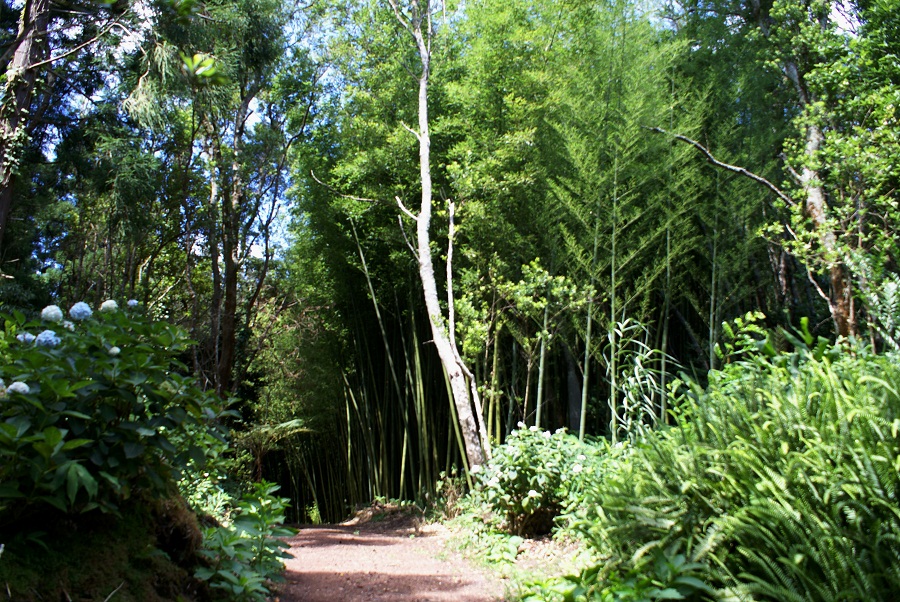
It’s Jurassic Park beautiful out here. Amazingly, all this beauty managing to stay blissfully oblivious to tourism.
Climate
You would expect the climate on such beautiful lands to be homogeneously as beautiful. It is. The climate is mild and equable, with pleasant temperatures throughout the year. The average temperature in the Azores is 23˚C, and the maximum you’ll get to hot is 27˚C. Winter temperatures average 13˚C, and could sometimes fall to 4˚C during the night. Sea temperatures vary relatively too, and you’ll often see people enjoying a dip between February and March when the sea temperature is at its lowest (15-16˚C).
Most months experience rainfall, but it is rarely persistent. With rainbows, of course. They say in the islands that you can experience all four seasons in a single day. So when you find yourself there and the rain is spattering in the morning, worry not. Your plans won’t be rained on.
When to Visit
Each island has its own individual charms. In terms of weather, Santa Maria is deemed the sunniest, with the western islands (Flores and Corvo) being the wettest. For clarity’s sake, it’s nice to point out that the islands are divided into three groups: the eastern islands (Santa Maria and Sao Miguel), the central islands (Graciosa, Terceira, Pico, Faial and Sao Jorge islands), and the aforementioned western. The warmest months are June and July, with April and September the most fickle – but as everywhere else on the planet, the old patterns are vanishing.
Every month in the Azores is a delight, and you won’t be short of activities to partake in. However, when to go will determine a lot what to do.
The summer months between mid-April and early October are best for sea activities – fishing, sailing, inter-island ferry commute, whale watching. As much as the Azores are not your typical beach destinations (and it would be wise not to treat them as such), the summer months are again the most popular time to hit the beach.
Swimming can be done throughout the year. So can walking, although this is better in summer as you don’t need to take the extra precaution needed for a jaunt in the slippery mountains.
Activities
Santa Maria boasts the best beaches on the archipelago, and is popular for surfing, along with Sao Miguel. Other activities to try here include windsurfing, water-skiing, jet-skiing and kayaking. Sao Miguel, Flores and Sao Jorge offer excellent canyoning routes thanks to the volcanic activity that has left behind a landscape of mountains, cliffs, ravines and streams.
But this doesn’t mean it’s a place for the adventurous only. Those who prefer to keep it on the low will find walking on all the islands an uplifting affair, whether we are talking the mild circuit of the Sete Cidades crater (the most amazing view you’ll ever see), or the more strenuous (but totally worth it) ascent of Mount Pico.
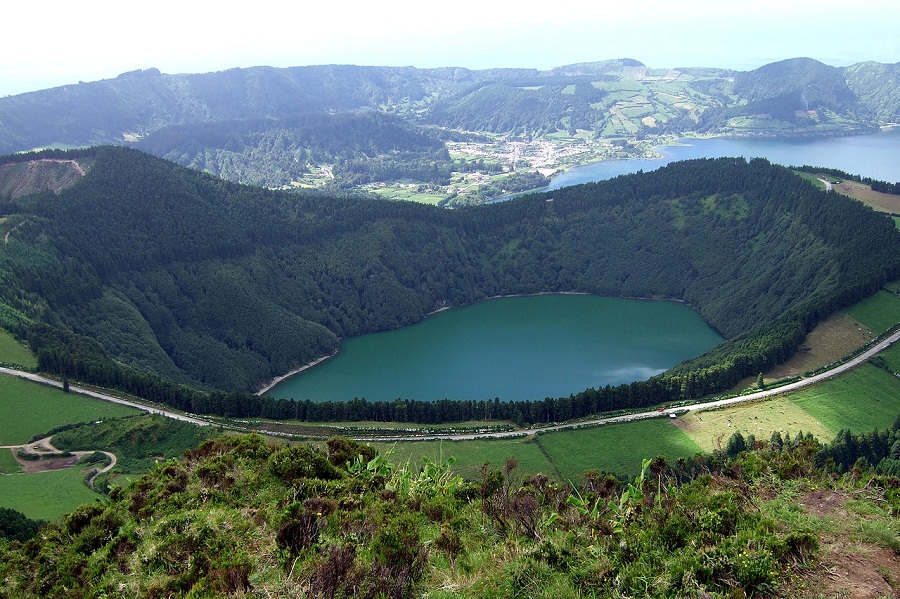
Speaking of Pico. With a shoreline full of character, this is home to the highest point in Portugal – the peak of the Ponta da Pico Mountain. You’ll also find the islands’ most accessible native flora here.

While Sao Miguel and Faial may be gaining popularity for walking, Sao Jorge is still king on this front. But Sao Miguel is best for gardens and has the most developed infrastructure for cycling.
The small Graciosa, on the other hand, will blow your mind away in terms of geological features, with the Sulphur Cavern – deemed a ‘hole within a hole’ – the epitome of them all. This is the place to go for anyone seeking serenity.
Terceira (second-most populous island after Miguel) is another central island that is rich in culture, and its capital – Angra do Heroismo – is on the UNESCO International Heritage list. It is considered the archipelago’s architectural and spiritual centre. The draw that it is for history buffs, golfers will also appreciate its fine golf courses, along with San Miguel’s. The latter’s course at Furnas has to be one of the most exquisite and intimate anywhere in the world. And then there’s Corvo, one of the two western islands along with Flores (home of the waterfalls) and the smallest of them all. This is a peaceful haven where foot is the only way of getting around. It is home to another spectacular caldera, the Caldeirao, which happens to be its only feature.
What to Eat and Drink
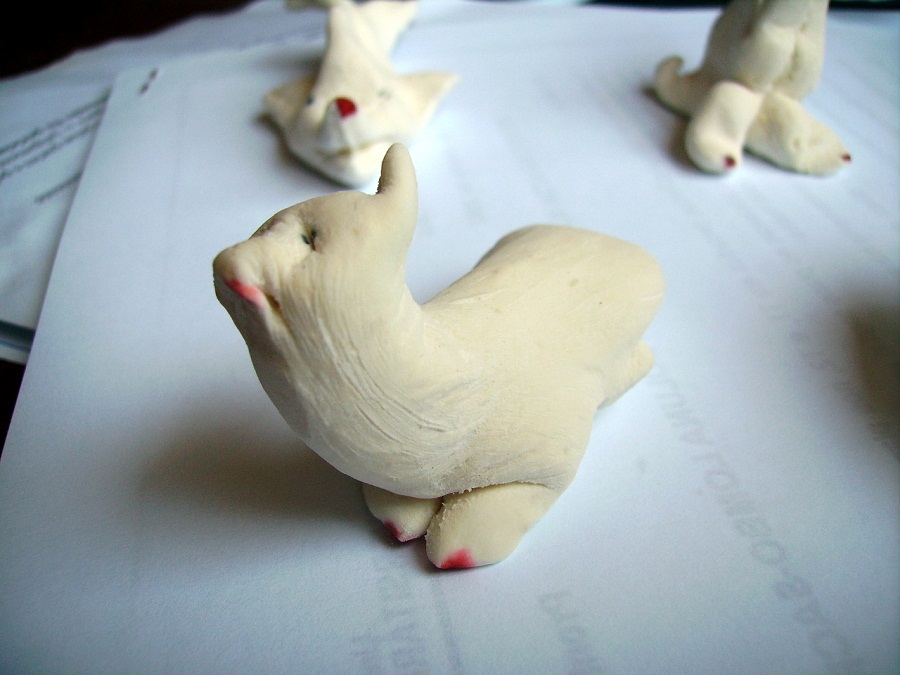
Most visitors to the Azores don’t go there for a gastronomic experience. But this is not to say the islands don’t have a few specialties to whet your appetite. There is the alfernim, for instance, which you’ll mostly find in Angra, Terceira. These are small snacks made from sugar paste with characteristic shapes, mostly bird.
Chicken and beef are also an abundant feature on many a menu. You might especially want to try out the Alcatra, a beef casserole prepared in a large pot and usually served with thin gravy and sweet bread as an accompaniment. Being an island, it goes without saying that seafood is plentiful, locally-caught fish too. Limpets, swordfish, crab and tuna are another common feature on menus, as is wreckfish, a white fish similar to halibut.
There are vineyards on a number of the islands, and those on Pico especially warrant a special mention.
Getting around
Air
The larger islands have multiple daily flights daily, unlike the smaller ones which, in winter especially, average only a few times a week.
Given their natural position, expect the weather to disrupt the flight schedule ever too often, so a little flexibility on your part would go some way.
Sea
The Atlantico Line plies routes linking all the islands, although some routes are not served daily.
Sailing will take time, but this depends on destination. Sao Miguel-Terceira for example, takes five hours, while it only takes 40 minutes from Flores to Corvo. As with flights, boat schedules too are dependent on weather.
In-land Travel
Hiring a car is the most effective means of getting around on the islands, save for Corvo.
Be prepared for some bumpy rides (and scarce signposting), but given the scale of the islands, it’s not like you’ll be on the road for hours on end.
Bus service is available in most islands though not suitable for anyone on a tight schedule given their infrequent service. The good thing for anyone pressed on time is the availability of taxis that can be hired for hours, or the entire day.

Jane Freeman is a travel blogger and digital marketer based in the UK. Jane splits her time between London during the Spring/Summer and Asia in the winter.